
Nothing is shared until you say yes.
What landlords, agents and tenants can see at each step, and the moment a name, number or address is passed on.
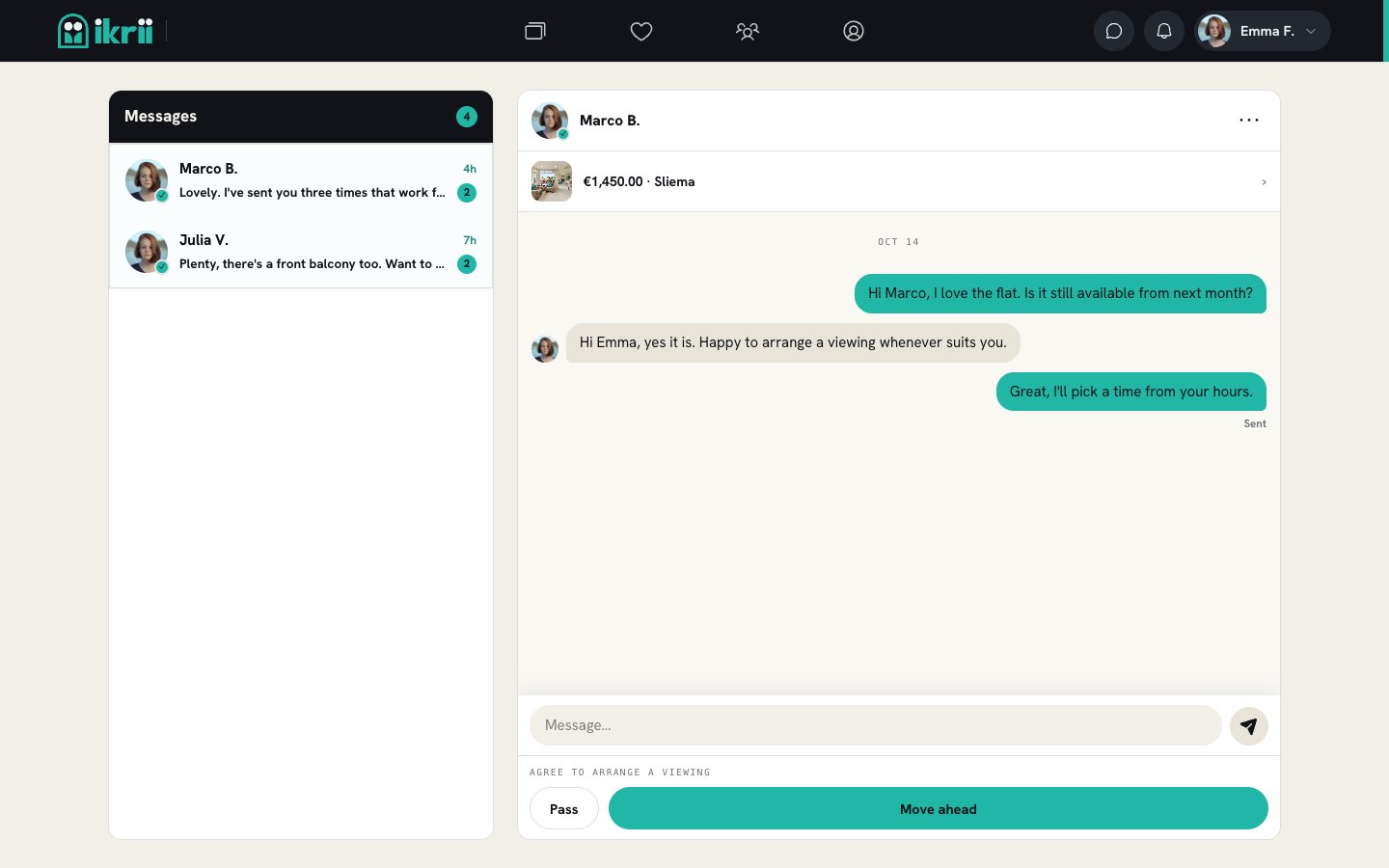
Contact needs two yeses.
A landlord or agent can request contact. A tenant can like a listing. Neither side sees a full name or phone number until the other accepts.
Partial names everywhere
Others see “Mark T.” until you connect.
Decline without a reason
The other side sees the request closed, not why.
Block and report in every conversation
From the menu in the conversation, or from the safety row at the top of it.
Checked once. Then deleted.
You add an ID when it first blocks something: replying to a landlord as a tenant, or sending a contact request as a landlord or agent. After review the document is deleted. Your profile keeps the result.
Asked at the point of need
Browsing, liking, saving and drafting listings all work without it.
What is kept
The result and the date. Not the scan.
Phone works the same way
Collected at sign-up, confirmed only when it starts to matter.
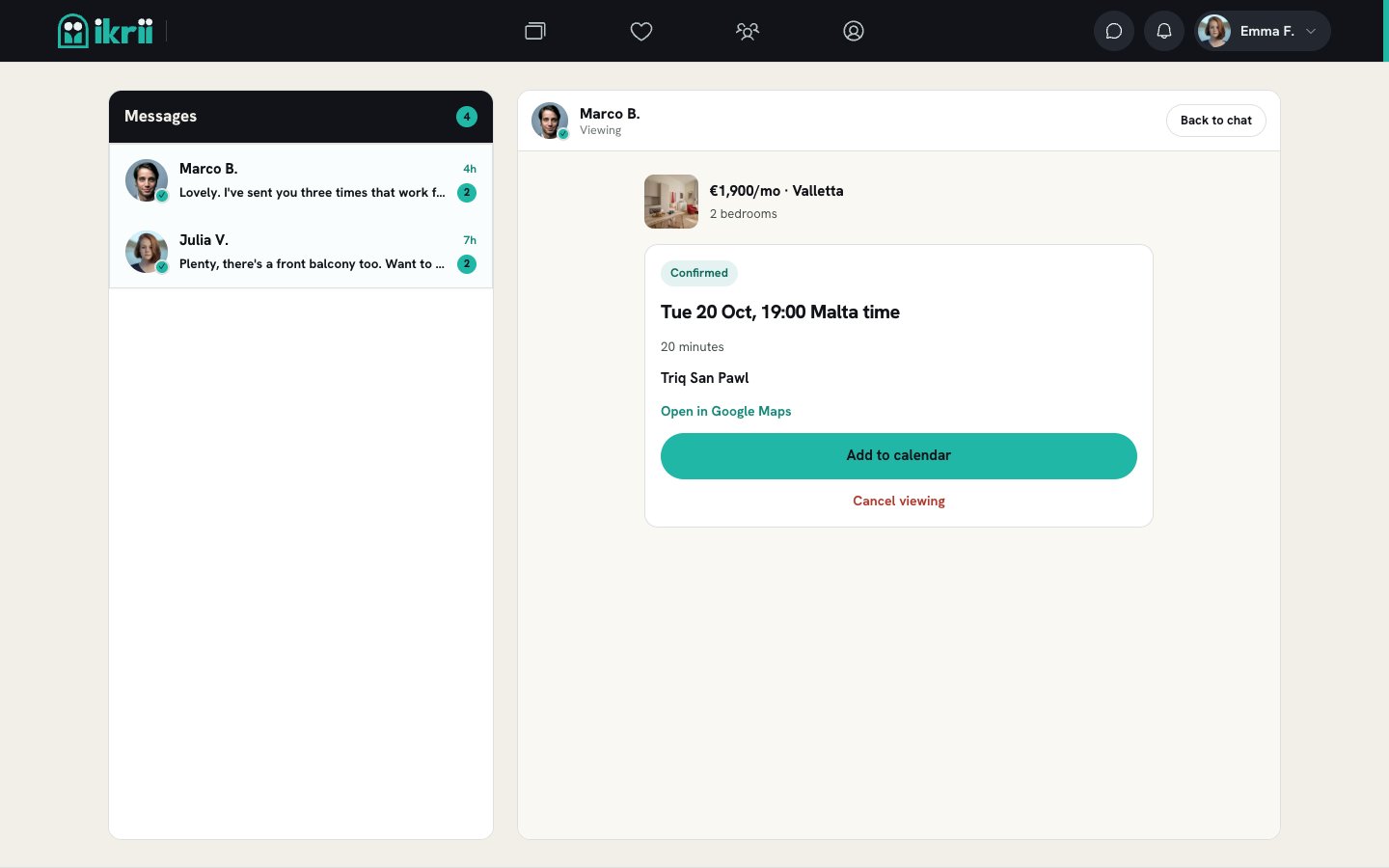
Area first. Street once a time is agreed.
Listings and public listing pages show the area only. The exact address goes to one tenant, once both sides confirm a viewing time.
Per viewing, not per listing
Each confirmed viewing unlocks the address for that tenant only.
Public pages stay area-only
Search engines see the area, never the street.
A live arrival map on the day
The landlord sees when the tenant is close.
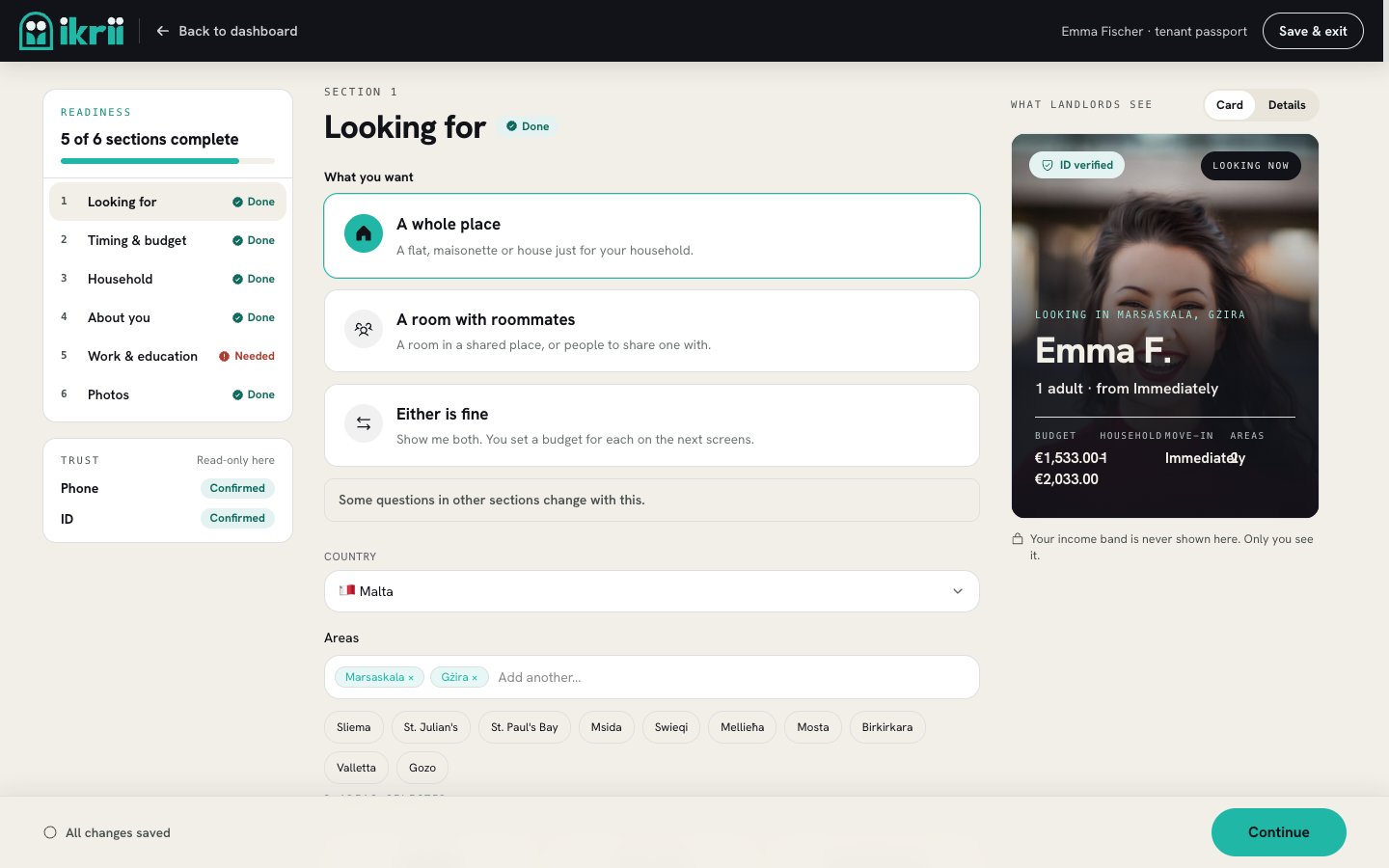
Verified, not just claimed.
Every passport line says whether it was checked or only stated. Landlords and agents can filter to verified lines.
Income and employment
Marked verified once a document has been reviewed.
References from past landlords
Confirmed with the referee, not copied from a form.
Tenants choose their visibility
Leave discovery at any time. Existing conversations stay.
A badge earned per person.
Each agent's licence or permit is checked individually. It is never inherited from an agency, so a new colleague has no badge until their own check passes.
Badge next to every name
Tenants see it before they accept a request.
Colleague contact is flagged
Before you reach out, you see if someone on your team already has.
Asked and answered.
- Can a landlord see my phone number before I accept?
- No. Your full name and phone number are shared only after you accept their contact request.
- Does Ikrii keep a copy of my ID?
- No. The document is deleted after review. Your profile keeps the result and the date it was checked.
- When do I have to verify my ID?
- Only when it blocks something. Tenants verify before replying to a landlord or agent. Landlords and agents verify before sending a contact request.
- When does a tenant see the exact address?
- Once both sides confirm a viewing time. Before that, listings show the area only.
- How do I know an agent is licensed?
- Look for the verified badge next to their name. Every agent is checked individually, never through their agency.
Browse without giving anything away.
Browsing, liking and building a passport need no ID. You verify only when you reply to someone.